Reimagining the Marketplace with AI-first Design

End-to-end ownership: from business goals to design delivery

My Role

This was a solo project where I took full ownership, covering both Product Design and Product Ownership.
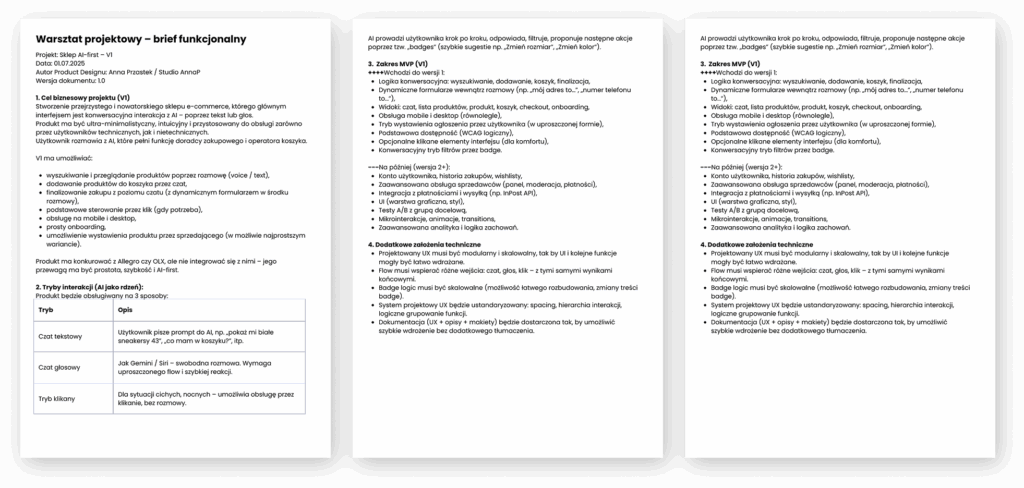
I was responsible for the entire product cycle – from defining the strategy and KPIs, through user flows and design execution, to final documentation for developers.
Defined business goals & product vision

KPI for MVP
– Reduce purchase time from 7 min → 2 min
– ≥ 75% user satisfaction (scale 1–5)
– ≥ 60% users willing to reuse AI flow

Created roadmap:
MVP → AI-trust layer → full ecosystem


Designed user journeys & information architecture

– Created detailed user flows (buyers & sellers)
– Key trade-off: balancing seller control vs. buyer simplicity


Built UX/UI for conversational + voice + click flows

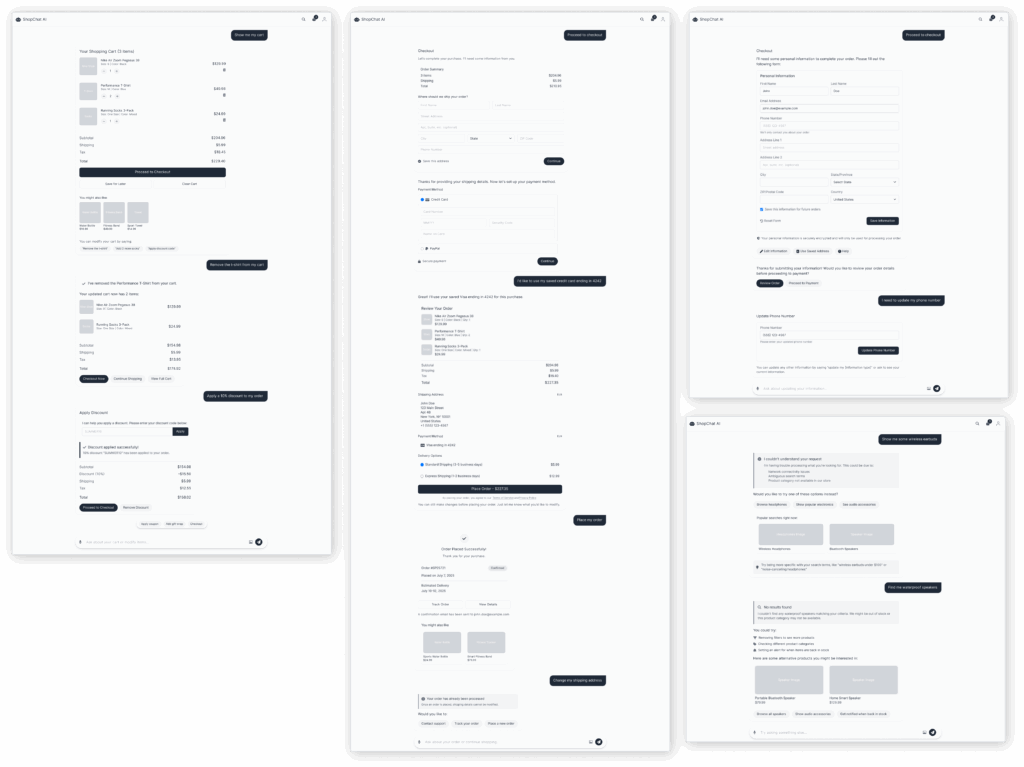
– Designed low-fi & hi-fi for chat, checkout, cart
– Introduced badge/filter logic → AI converts free-form queries into structured filters


Delivered documentation & system design for dev handoff

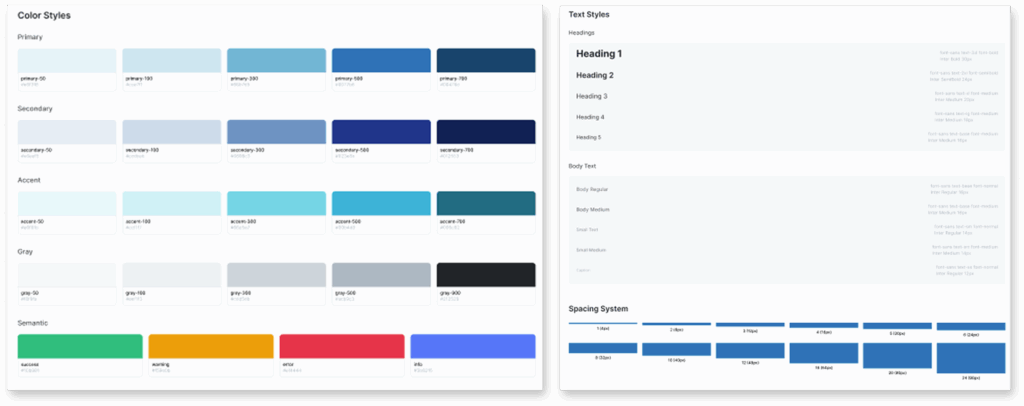
– Prepared spacing system, component checklists, badge logic
– Ensured consistency and scalability for dev handoff

The Business Challenge

Traditional marketplaces are complex, time-consuming, and cognitively heavy. On average, completing a purchase requires 6–8 steps and takes about 7 minutes.
The goal was to design an AI-first marketplace that reduces checkout time by 70% and lowers user effort through conversational, voice, and guided flows.

Market Pain Points

Average checkout time: 7 min
Steps to complete purchase: 6–8
User feedback: “Too complex, not intuitive”

Business Goal

Target checkout time: 2 min
Reduce steps: 3 or fewer
Target user satisfaction: ≥75%

Checkout Time & Steps

AI-first flow reduced purchase time by 70% and steps by 60%

User Satisfaction (survey data)

Testing showed significantly higher satisfaction and adoption of the AI-first flow.

Willingness to reuse (%)

Percentage of users indicating intent to reuse AI-assisted checkout flow (user testing survey).

Adoption Rate: Buyers vs. Sellers

AI-first model significantly increases adoption for both buyers and sellers.

Strategy & Process (Ownership angle)

This project followed a lean, ownership-driven process where I combined strategic decision-making with hands-on design execution.

Phase 1 – Research

-Competitive analysis (benchmark: Allegro checkout → avg. 7 min)
-User interviews (n=8 buyers, n=4 sellers) → insights: complexity + lack of trust in AI

Phase 2 – Ideation

-Defined core hypothesis: “AI can reduce checkout flow to < 2 minutes while maintaining seller control.”
-Created initial flows (voice, chat, click).

Phase 3 – Prototyping

-Built lo-fi & hi-fi prototypes for buyers and sellers.
-Introduced badge/filter system → AI interprets natural queries.

Phase 4 – Testing & Iteration

-Usability test (n=12, mixed group buyers/sellers).
-Metrics:
-83% successfully completed task in <2 min.
-75% reported higher clarity vs traditional flows.
-Sellers: 65% adoption intent after AI-assist demo.

As both Product Designer & Product Owner I defined priorities, trade-offs, and KPIs for the MVP. This ensured alignment between business goals and user outcomes.
min
Checkout time
%
Task success
%
User satisfaction
%
Seller adoption intent

User Research & Personas

Validating assumptions and aligning business goals with user needs.

Persona A – Buyer

Marta, 32
Busy professional who shops online daily to save time.
“I just want to buy what I need in 2 minutes, not 20.”

Needs
Quick, hassle-free checkout.
Clear product comparison without endless filters.
Trustworthy AI suggestions.

Pain Points
Checkout takes too long (avg. 7 minutes on competitors).
Too many steps and irrelevant filters.
Hesitant to trust AI in making purchase decisions.

Goals
Reduce shopping time drastically.
Get clarity without cognitive overload.
Feel confident that AI is helping, not forcing choices.

Behaviors
Shops mainly on mobile (80%).
Abandons carts if checkout > 3 steps.
Reads reviews but dislikes over-complex search/filter tools.

AI Attitude
Curious but cautious: open to AI assistance if it proves faster and transparent.

Persona B – Seller

Adam, 41
Independent online store owner managing 150+ SKUs.
“I want more buyers to discover my products without losing control to algorithms.”

Needs
Control over how offers appear.
Simple backend to upload and manage inventory.
Visibility in search results (fair exposure).

Pain Points
Fear that AI hides or deprioritizes offers.
Current backends are complex, time-consuming.
Hard to compete with larger sellers on traditional platforms.

Goals
Reach more buyers with minimal effort.
Maintain brand control and transparency.
Scale business without spending hours on admin tasks.

Behaviors
Works via desktop, manages store in daily batches.
Limited technical knowledge → struggles with complex UIs.
Tracks sales manually in spreadsheets.

AI Attitude
Skeptical: open to automation only if it doesn’t reduce visibility or control.

Validating the AI-first Marketplace Hypothesis

Prototype testing confirmed that conversational and AI-assisted flows reduced checkout time and improved clarity for buyers. While adoption intent among sellers was slightly lower, results validated the product direction and provided clear priorities for the MVP roadmap.

As Product Owner, I validated early assumptions before investing in development, reducing risk and aligning business goals with user outcomes.

Flows & Architecture

Designing flows and structures to balance buyer simplicity with seller control.
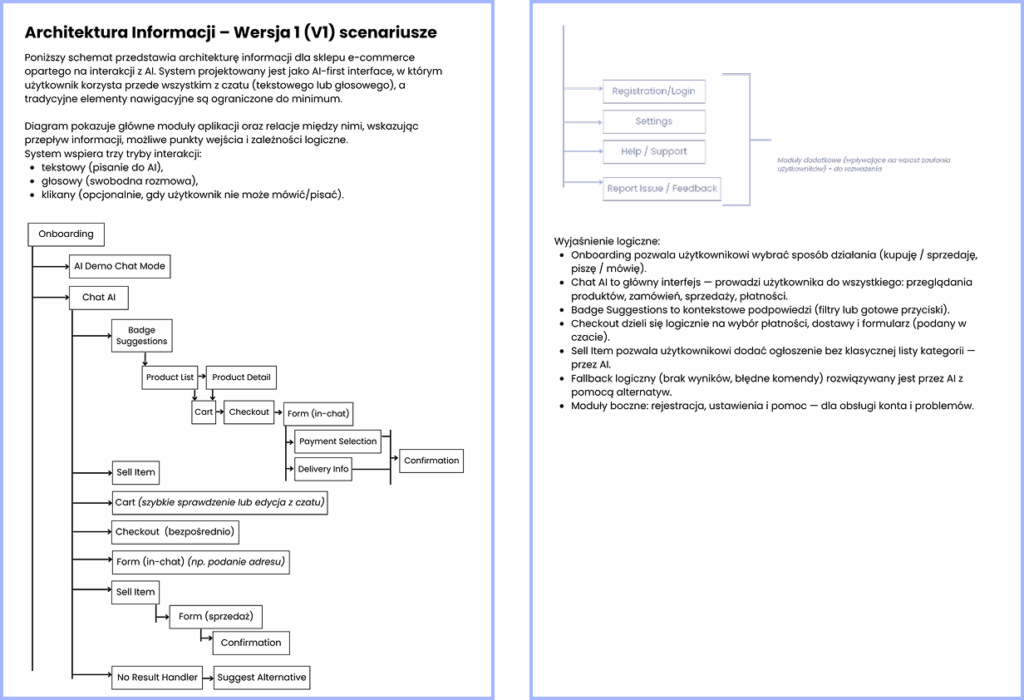
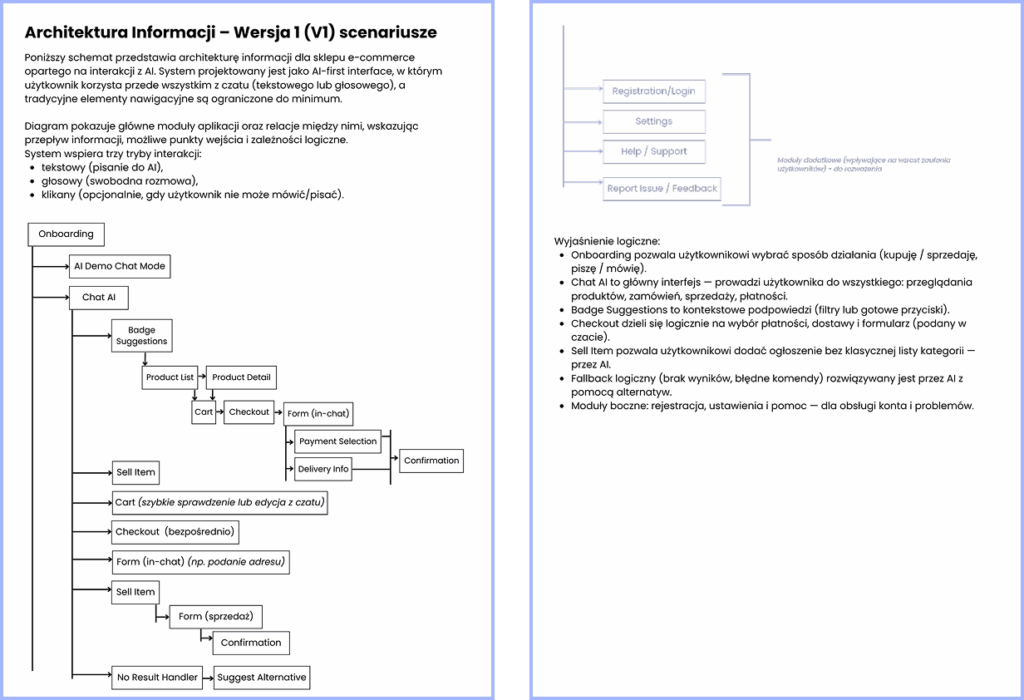
Architecture Overview

High-level information architecture aligning buyer and seller journeys into one AI-first marketplace system.

Information Architecture Highlights:
-Unified entry point (chat-first: text & voice).
-Buyers: reduced checkout to 3 key steps (product → cart → checkout).
-Sellers: streamlined item listing & backend forms.
-AI badge/filter logic replaces manual filtering.
-Fallback options ensure accessibility (click flow).

This architecture minimized navigation complexity while keeping full control for sellers — ensuring alignment between business goals and user outcomes, and creating a scalable foundation for future AI-driven iterations.


Key User Flows

To validate the architecture, I mapped out simplified flows for both buyers and sellers. The goal was to minimize friction for buyers while keeping full control for sellers.

a) Buyer Flow-Simplified Journey

1. Search / AI prompt – user starts with natural language or voice input instead of manual filters.
2. AI suggests products – marketplace engine generates dynamic suggestions and structured filters.
3. Add to cart – buyer selects items directly from AI results.
4. Checkout (3 steps) – confirm → payment → done.

Buyer flow reduced from 7 steps (benchmark) to only 3 through conversational + AI assistance.

b) Seller Flow-Assisted Journey

1. Product upload – seller adds a new product to the marketplace.
2. AI auto-tags & categorizes – system automatically generates metadata and suggests categories.
3. Seller reviews/edit – seller reviews AI suggestions, keeps or adjusts tags and descriptions.
4. Product published – product goes live with optimized visibility.

Seller flow keeps control over product visibility while reducing manual admin tasks.


Trade-offs & Ownership Callout

Ownership meant defining trade-offs: how to give sellers enough control while ensuring buyers experience a radically simplified journey. Prioritization here shaped the MVP scope.

Buyers → reduced checkout steps from 7 to 3.
Sellers → preserved full control over product visibility.
MVP scope → prioritized simplicity over advanced seller analytics (reserved for later phases).

Design Execution

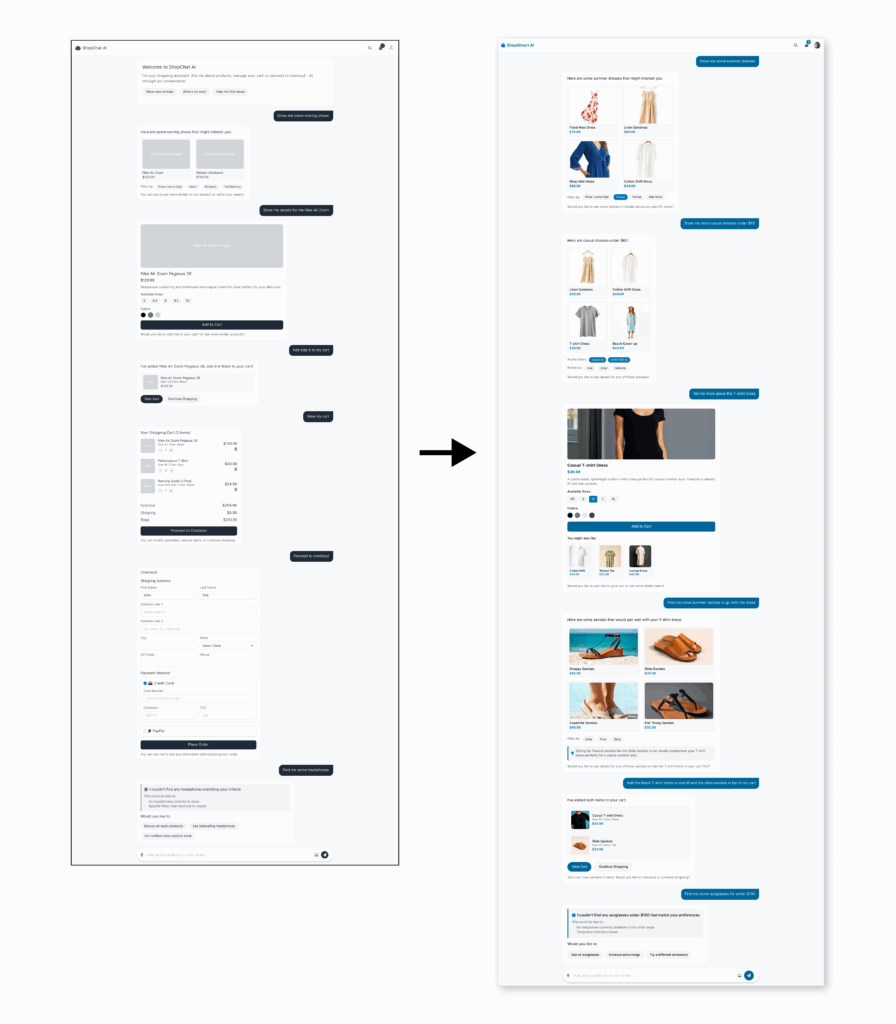
Moving from strategy to execution, I translated user flows into tangible UI screens. I iterated from low-fidelity wireframes to high-fidelity prototypes, validating key interactions. I designed with scalability in mind, preparing a component library for future development.
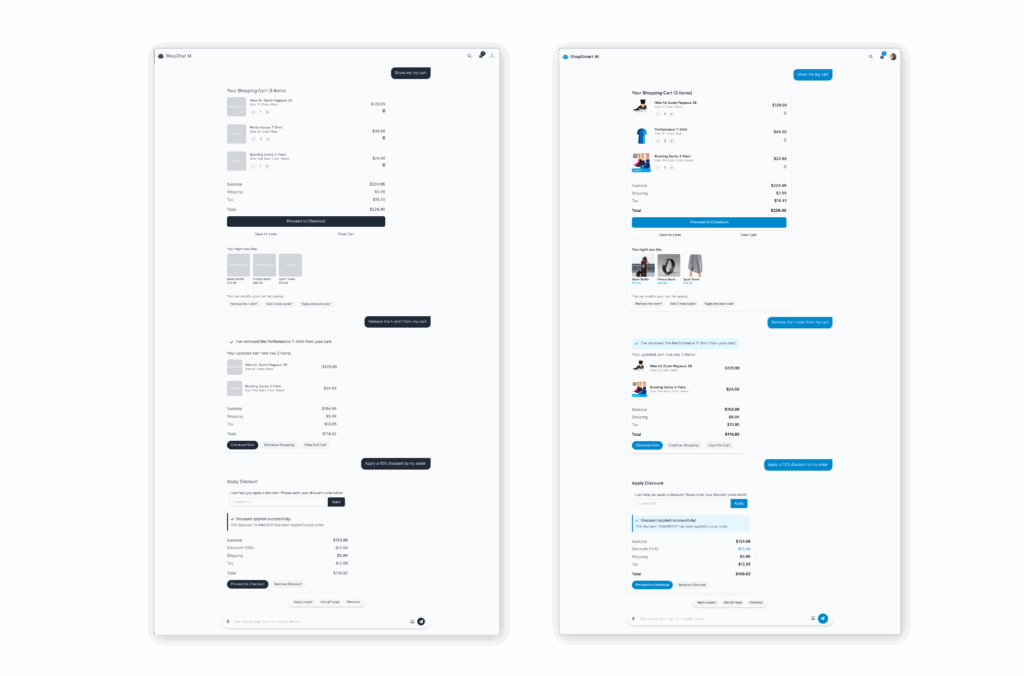
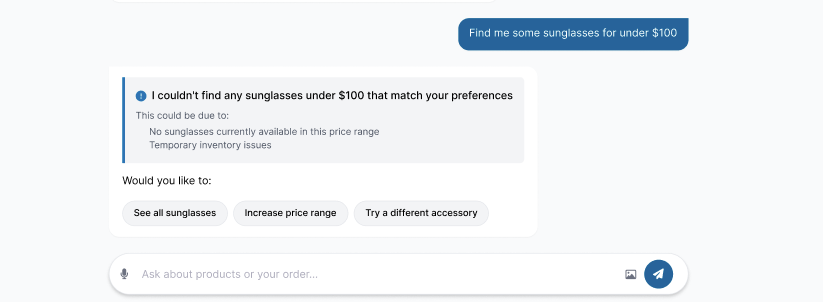
From wireframes to polished UI — keeping clarity and speed at the core of the experience.

Badge / Filter Logic

One of the most unique aspects of this marketplace design was the Badge / Filter Logic. The system converts natural language or voice prompts into structured badges — effectively turning conversational queries into transparent filters. This reduced cognitive load for buyers while maintaining clarity and control for sellers.

Dynamic AI-to-filter logic ensured transparency and built user trust.

Before (Traditional Marketplace):

– Manual filtering through multiple menus
– Time-consuming & frustrating
– Cognitive load: user must “think like the system”
– Takes 6–8 steps to refine search

After (AI-first with badges):

+ Instant badges generated from query
+ Transparent & editable filters
+ AI adapts to the user’s own words & intent
+ Results in 1 step, directly from the prompt

Replacing hidden filter menus with transparent, AI-generated badges significantly reduced friction and built trust in the system.
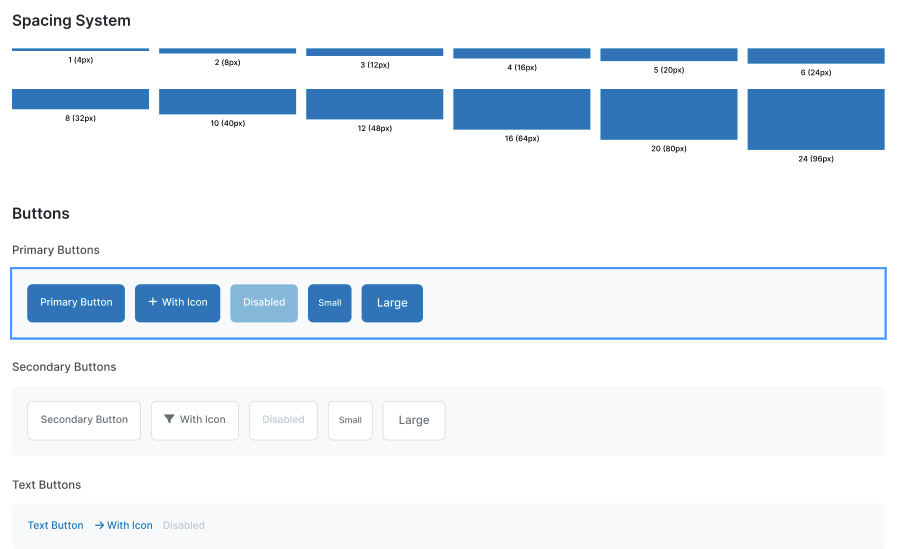

Component Library & Scalability

I built a scalable component library covering spacing, buttons, badges, and forms. This ensured consistency across the product and smooth developer handoff. By documenting component logic and states, I prepared the system for future iterations and scaling beyond the MVP.

Design system foundation — enabling consistent dev implementation.

User Testing & Validation

Validating the AI-first hypothesis with users.

Prototype Validation (n=12)

I tested the AI-first prototype with 12 users (buyers & sellers).
83% completed checkout in under 2 minutes,
75% reported higher clarity compared to traditional marketplaces,
and 78% said they would reuse the AI flow for future purchases.

This confirmed that conversational commerce can radically simplify user journeys while maintaining trust.
Prototype validation showed a 70% faster checkout, higher user satisfaction, and strong adoption intent for AI-first flows.


Business Impact Validation

Early validation not only proved usability but also showed strong business potential. By testing before dev investment, I reduced risk and confirmed adoption drivers:
Adoption potential → 82% buyers, 70% sellers showed intent to adopt.
Risk mitigation → 60% fewer drop-offs projected compared to benchmarks.
ROI → faster checkout flow estimated to increase conversion by +25%.

Early validation confirmed adoption potential and reduced risk: higher buyer & seller adoption, fewer drop-offs, and stronger conversion projections.

Outcomes & Impact

This project validated the concept of an AI-first marketplace and demonstrated its potential to radically simplify commerce. As the sole owner, I managed strategy, UX, and delivery — completing a full end-to-end cycle.


Key Outcomes

Concept validated

Prototype testing confirmed user demand and adoption potential.

Documentation delivered

Full design system, flows, and handoff package ready for dev.

Strategy prepared

MVP roadmap defined with phased rollout plan (AI trust layer → ecosystem).


%
faster checkout
%
buyer adoption intent
%
fewer drop-offs projected

This case study demonstrates my ability to act as both Product Designer and Product Owner — delivering strategy, design, and execution in one cohesive process.

Reflection / Next Steps

Ownership taught me how critical trade-offs are in AI-first design – balancing trust, control, and efficiency.
Before moving into development, I prepared detailed checklists for dev teams to streamline manual and automated testing. I also defined key growth metrics and proposed phased validation (v1 → v2 → v3), ensuring that each release builds measurable user and business value. The next step would be real-world A/B testing of trust signals and seller workflows.

This project reflects my ability to own the entire product lifecycle – from product vision and strategy to design delivery and dev handoff. If you’re looking for someone who combines product strategy with hands-on design execution, let’s talk.

Let’s work together

Email: a.k.przastek@gmail.com

Remote-first
Working with clients worldwide.